Choosing the right clip nut can simplify assembly, reduce installation time, and provide a reliable threaded connection without tapping the panel itself. J-Nuts and U-Nuts are two common spring steel fastener types used for sheet metal applications, but their different shapes affect how they attach, retain, and perform. Understanding the differences between a J-nut vs U-nut can help engineers and buyers select a fastener that fits their panel, screw, and assembly requirements.
What Is a J-Nut?
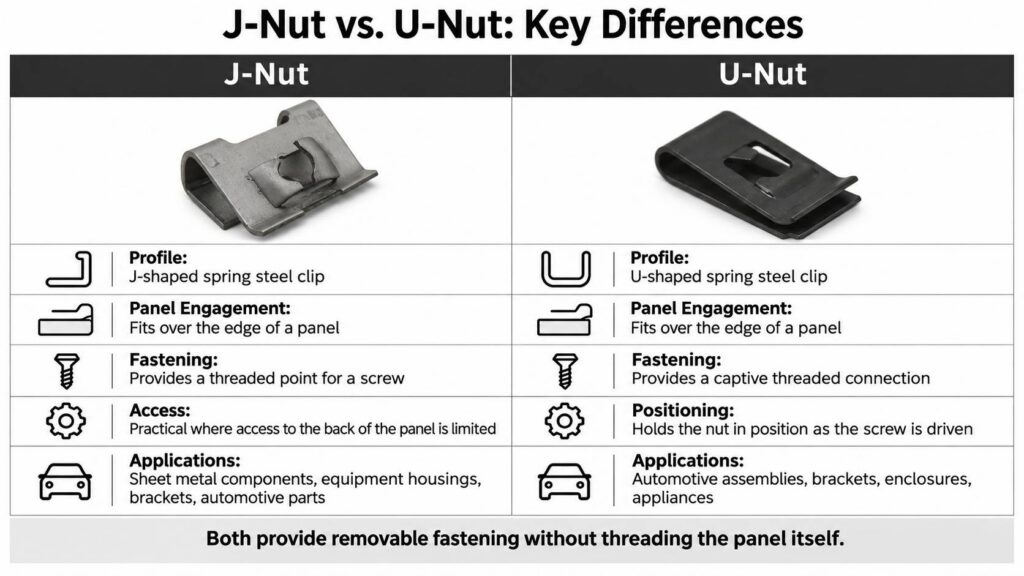
A J-Nut is a spring steel clip nut with a J-shaped profile that grips the edge of a panel. Its threaded section provides a fastening point for a screw without requiring threads to be formed directly into the panel. This makes J-Nuts practical for assemblies where access to the bottom of the panel is limited.
J-Nuts are commonly used on sheet metal components, equipment housings, brackets, automotive parts, and other assemblies that require removable fastening. The clip can be positioned on the panel before the screw is installed, helping streamline production and service work.
What Is a U-Nut?
A U-Nut uses a U-shaped spring clip that fits over the edge of a panel. Like a J-Nut, it provides a captive threaded connection while allowing the panel to remain unthreaded. The clip holds the nut in position as the screw is driven into the threaded section.
As a sheet metal clip nut, a U-Nut is useful for applications that require quick installation and removable fastening. Its compact clip design makes it suitable for brackets, enclosures, appliances, and other components made of sheet metal or plastic.
Key Structural & Application Differences
The main difference between a J-Nut and U-Nut is their clip configuration. A J-Nut uses a J-shaped profile, while a U-Nut wraps around the panel edge with a U-shaped profile. These differences affect panel engagement, positioning, and accessibility during assembly.
For a J-nut vs U-nut comparison, consider how the clip will sit on the panel and how easily the screw can be installed. The available panel edge, mounting location, and required retention can all affect which option fits the application.
Load, Panel Thickness & Material Considerations
Panel thickness, screw size, expected load, and operating conditions should be considered before selecting a clip nut. The fastener must fit the panel correctly and provide sufficient thread engagement for the intended connection.
- Key factors: panel thickness, screw dimensions, load requirements, vibration, material, finish, corrosion exposure, and installation access.
The material and spring characteristics of the sheet metal clip nut also matter. Selecting a clip that matches the panel material and application helps provide consistent retention without damaging the panel, whether it is made of sheet metal or plastic.
How to Choose the Right Fastener
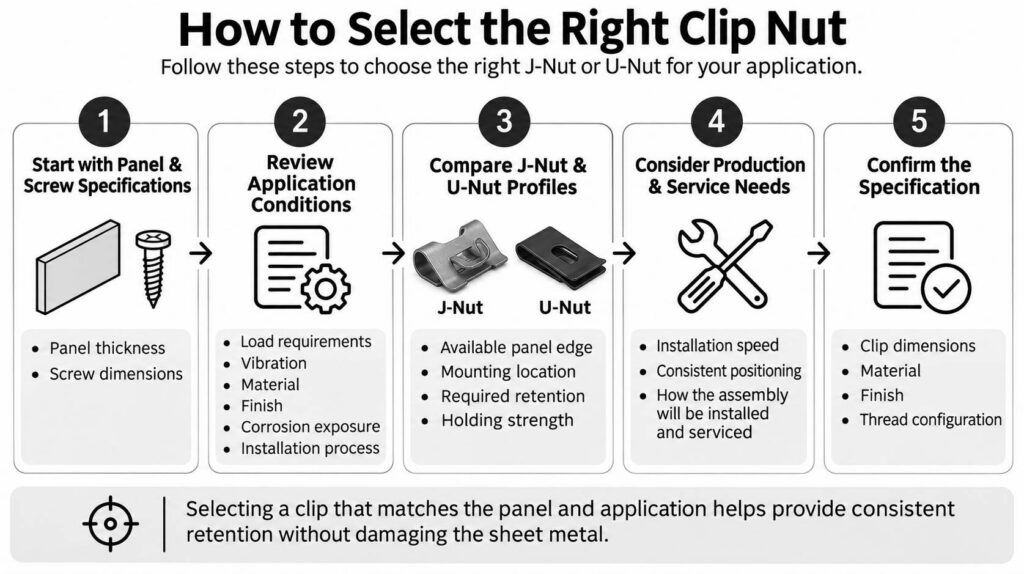
Start with the panel and screw specifications, then consider how the assembly will be installed and serviced. Compare the J-Nut and U-Nut profiles against the available panel edge and required holding strength.
For high-volume production, installation speed and consistent positioning may also influence the selection. Your supplier can help confirm the appropriate clip dimensions, material, finish, and thread configuration based on your application.
Get Expert Help from ACS Mfg
ACS Manufacturing can help engineers and buyers identify spring steel fastening options for their specific assembly requirements. Whether you need a J-Nut, U-Nut, or another spring steel fastener type, providing details such as panel thickness, screw size, material, and application conditions can help narrow the right specification.
Contact ACS Manufacturing to discuss your fastening requirements and find a clip nut suited to your assembly.